
Hot Cinnamon Tea: What It Does to Your Body and Why the Type of Cinnamon Matters
There’s something almost automatic about reaching for cinnamon when a cup of black tea feels like it needs something. The warmth, the faint sweetness, the way it makes the whole kitchen smell better — it just works. But hot cinnamon tea turns out to be more than a comfort habit. A student in one of my brewing workshops once asked me whether adding cinnamon actually changes what the tea does to your body, and the honest answer surprised me. It does — and in more ways than just flavor.
What Happens When Cinnamon Hits Hot Water
Cinnamon’s aroma and most of its bioactivity come from a compound called cinnamaldehyde, the primary volatile molecule in cinnamon bark. When you steep a cinnamon stick in hot water — or drop ground cinnamon into a hot brew — heat releases this compound along with a family of polyphenols, including proanthocyanidins, cinnamic acid, and various phenolic compounds (Pagliari et al., 2023).
The extraction isn’t instant. A cinnamon stick needs at least five to eight minutes in near-boiling water before it releases a meaningful concentration of its active compounds. Ground cinnamon works faster due to the increased surface area, but it can also cloud the cup and add a gritty texture some people find unpleasant. Either way, what ends up in your mug is a chemically richer liquid than the base tea alone.
Research on cinnamon bark extracts confirms that hot water extraction preserves key bioactive compounds, particularly cinnamic acid, even after exposure to heat and simulated digestive conditions (Pagliari et al., 2023). This means steeping cinnamon in your tea is not just adding flavor — you’re actually pulling functional compounds into the cup.
The Flavor Effect: What Cinnamon Actually Does to Your Tea’s Taste
Adding cinnamon to tea changes more than the aroma. It interacts with the tea’s own chemical makeup in a few interesting ways.
In black tea or cinnamon black tea blends, cinnamon softens the perception of bitterness. Black tea’s tannins can create that dry, astringent sensation at the back of the throat — cinnamon’s natural sweetness, without any actual sugar, modulates that effect and makes the cup feel smoother. If you’ve ever steeped a robust Assam and found it a touch sharp, a cinnamon stick in the pot can take the edge off without masking the tea’s depth.
In cinnamon green tea, the spice adds warmth and body that green tea naturally lacks. Green tea tends toward grassy, vegetal, or lightly floral — cinnamon bridges the gap for anyone who loves the health profile of green tea but finds the flavor underwhelming on its own.
Cinnamon also pairs well with apple, which is why apple and cinnamon tea is such a natural combination. The fruit’s tartness and the spice’s warmth play off each other, and together they can make a naturally sweet cup without any added sweetener. The same logic applies to ginger and cinnamon tea — both spices are warming, but ginger adds a bright, almost sharp heat while cinnamon brings depth and sweetness. They complement rather than compete.
Sandy’s Science Corner: Cinnamaldehyde in Hot Water
Cinnamaldehyde, cinnamon’s primary active compound, is a phenylpropanoid — a class of plant-derived molecules built around a specific aromatic ring structure. When exposed to hot water, cinnamaldehyde volatilizes partially (creating the familiar aroma) and dissolves partially into the liquid. Research shows it suppresses inflammatory signaling pathways by inhibiting NF-κB, a master regulator of immune response, and reduces production of inflammatory proteins including TNF-α and IL-6 (Ranasinghe et al., 2013).
Hot Cinnamon Tea and Blood Sugar: What the Research Shows
This is where the science gets genuinely interesting — and where you need to read carefully, because the evidence is real but not absolute.
Hot cinnamon tea has been studied in the context of blood sugar regulation, and the results suggest cinnamon may help slow the rise in blood glucose that typically follows a carbohydrate-heavy meal. The mechanism appears to involve cinnamon’s polyphenols mimicking insulin activity at the cellular level and slowing the breakdown of carbohydrates in the digestive tract (Sahib, 2016).
A clinical trial found that 1 gram of cinnamon daily for 12 weeks reduced fasting blood glucose and glycosylated hemoglobin in type 2 diabetic patients, while also improving oxidative stress markers (Sahib, 2016). That’s not a trivial finding. But it’s also not a green light to treat cinnamon tea as a substitute for medical care. The effect sizes in these trials are modest, the populations studied are often already managing diabetes, and the doses used in research are typically higher than what ends up in a single cup of tea.
What you can reasonably take from this: adding cinnamon to your daily tea routine may contribute, as part of a broader healthy diet, to better blood sugar stability. It’s a nudge, not a cure.
The antioxidant angle is similarly compelling. Cinnamon contains a higher concentration of polyphenols by weight than many commonly cited antioxidant foods (Gulcin et al., 2023). When those polyphenols enter your hot cup of tea — which already contains catechins and flavonoids from the tea leaves themselves — you’re effectively layering two antioxidant sources. Research on cinnamon bark confirms strong free-radical scavenging activity, including against DPPH and ABTS radicals, two standard measures used in antioxidant research (Gulcin et al., 2023).
Cinnamon also shows anti-inflammatory potential in laboratory studies, with both cinnamaldehyde and cinnamic acid demonstrating the ability to reduce key inflammatory markers. These effects have been observed in cell-based and animal studies, and some human trials support them, though more large-scale clinical evidence is needed (Ranasinghe et al., 2013). Adding cinnamon to tea regularly may form part of an anti-inflammatory dietary pattern — much like turmeric, which works through related but distinct pathways.
Ceylon vs Cassia: The Type of Cinnamon Makes a Difference
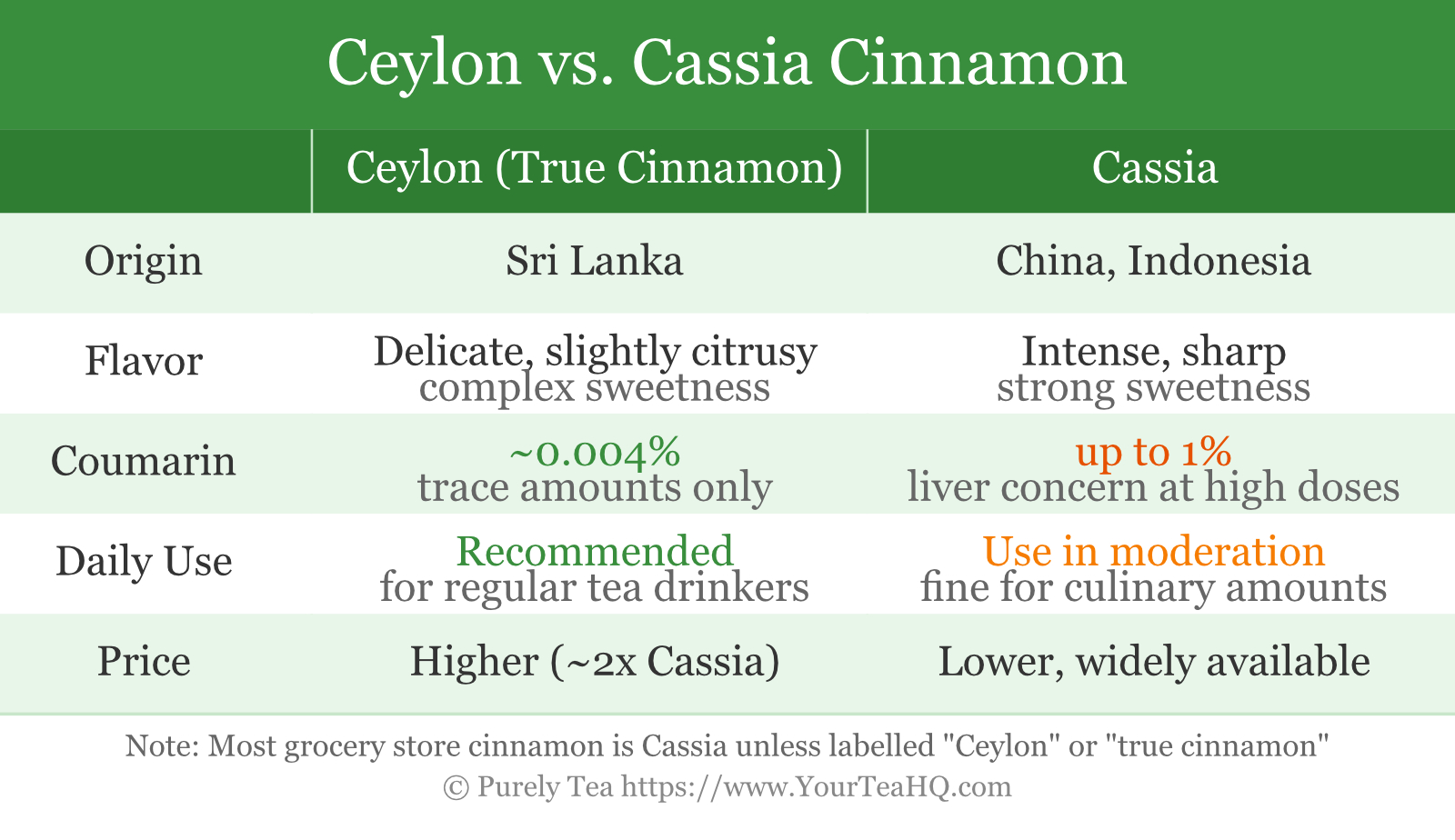
This section matters more than most cinnamon articles let on, and it’s particularly relevant if you drink hot cinnamon tea daily.
There are two main types of cinnamon sold commercially. Ceylon cinnamon (Cinnamomum verum), sometimes called “true cinnamon,” originates from Sri Lanka and is lighter in color with a more delicate, complex flavor. Cassia cinnamon (Cinnamomum cassia) comes primarily from China and Indonesia, is darker and more intense, and is the type you’ll find in most grocery stores in the United States and Europe.
The critical difference between them is coumarin content. Cassia can contain up to 1% coumarin by weight, while Ceylon contains only trace amounts — around 0.004% (Hamidpour et al., 2012). Coumarin is a compound with a tolerable daily intake established at 0.1 mg per kilogram of body weight; exceeding this limit regularly has been linked to potential liver stress, particularly in individuals with existing liver sensitivity (Hamidpour et al., 2012).
For someone having a cup or two of cinnamon tea a day, Cassia is unlikely to cause problems in most healthy adults. But if you’re consuming larger quantities — daily cinnamon supplements on top of spiced teas, for instance — ceylon cinnamon tea is the smarter long-term choice. It delivers the same flavor character and similar bioactive compounds with a far lower coumarin load. Ceylon also has a subtler, almost citrusy sweetness that many tea drinkers prefer once they’ve tried it.
Organic cinnamon tea, if that’s what you’re looking for, is available in both Ceylon and Cassia forms. The “organic” label speaks to how the cinnamon was grown, not which species it is — so it’s worth checking both.
Ashley’s Note: My Cold Morning Ritual
On cold mornings, I steep a Ceylon cinnamon stick directly in the pot with a good Assam black tea for about seven minutes before pouring. No sweetener — the cinnamon handles that. I found that breaking the stick slightly before adding it makes a noticeable difference in how much flavor comes through. Sometimes I’ll add a thin slice of fresh ginger. That combination has become such a consistent part of my mornings that skipping it feels like something’s missing.
How to Add Cinnamon to Tea and Actually Get Something Out of It
There’s a practical gap between knowing cinnamon is beneficial and getting those benefits into your cup consistently. Here’s what makes a real difference.
Stick vs powder: Cinnamon sticks release compounds more slowly but tend to produce a cleaner, more nuanced cup. Ground cinnamon disperses quickly and extracts more aggressively, but it won’t fully dissolve — you’ll get sediment at the bottom. For cinnamon chai tea or a spiced black blend, sticks brewed directly with the tea leaves give the best result. For a quick cinnamon green tea at the office, a small pinch of ground cinnamon stirred in at the end works fine.
Timing: If you’re using a stick, add it to the pot or mug at the same time as the tea leaves or bag. This gives the cinnamon and the tea compounds time to interact in the water together. Adding cinnamon after brewing does work, but you’ll extract less.
Temperature: Near-boiling water (around 90–95°C for black tea, slightly cooler for green) works well for cinnamon extraction. The same steep temperature that suits black tea is ideal for cinnamon sticks. Green tea brewed at lower temperatures will extract less from the cinnamon, but it still picks up flavor and some polyphenols.
Pairing notes: Cinnamon black tea is the most forgiving pairing — the robustness of black tea holds up to cinnamon’s intensity. Cinnamon chai tea already layers cinnamon with other warming spices like cardamom and clove, so the spice is amplified. Cinnamon green tea is more delicate; use less cinnamon and a shorter steep. Rooibos pairs beautifully with cinnamon — naturally caffeine-free and slightly sweet, it’s the base most compatible with Ceylon cinnamon’s flavor profile.
If you’re drawn to ginger and cinnamon tea specifically, simmer both together for five minutes rather than simply steeping. Heat helps release ginger’s gingerols and cinnamon’s cinnamaldehyde simultaneously, creating a more cohesive and potent brew. The technique used for ginger-forward herbal teas applies here: don’t just steep, simmer.
For those avoiding caffeine, decaf cinnamon tea is a straightforward option. Decaffeinated black or green tea still retains most of its polyphenol content, and cinnamon contributes its own compounds independently of the caffeine question. You get the antioxidant layering without the stimulant effect, which makes a decaf cinnamon blend a reasonable evening option. More detail on what the decaffeination process actually preserves is worth understanding before you buy — what remains in decaf black tea is often more than people expect.

Who Should Be Careful With Cinnamon Tea
For most people, a daily cup or two of hot cinnamon tea is perfectly safe and likely beneficial. But a few groups should exercise some caution.
People taking blood thinners (anticoagulants like warfarin) should be aware that coumarin in Cassia cinnamon has mild anticoagulant properties and could interact with medication at higher intake levels. Switching to Ceylon eliminates most of this concern.
Those with liver conditions should be conservative with Cassia-based cinnamon in large amounts. The coumarin concern is dose-dependent, and while culinary amounts in tea are generally considered safe, supplementing heavily with Cassia cinnamon alongside regular chai tea is worth discussing with a healthcare provider.
Pregnant individuals are generally advised to limit cinnamon in medicinal quantities, though the small amounts used in cooking and tea are widely considered acceptable. The broader picture of spice synergy in chai is worth reading if you’re navigating what’s appropriate during pregnancy.
Anyone managing blood sugar with medication should view cinnamon tea as a complement, never a replacement. The blood sugar effects observed in research are real but modest, and self-adjusting medications based on cinnamon intake is not supported by the evidence.
Conclusion
Most things people add to tea are about flavor alone. Cinnamon is different. It brings warmth and sweetness to the cup, yes — but it also changes the chemistry of what you’re drinking in ways that research supports. Whether you’re brewing a hot cinnamon tea first thing in the morning, experimenting with cinnamon green tea in the afternoon, or winding down with a decaf cinnamon blend in the evening, the spice adds something real. Just choose your cinnamon wisely — Ceylon for daily drinking, and always a stick when you have the time to do it properly.
Disclaimer: The information on Purely Tea is for educational purposes only and is not intended as medical advice. Always consult with a healthcare professional before making changes to your diet, especially if you have underlying health conditions.
References
- Pagliari, S., Forcella, M., Lonati, E., Sacco, G., Romaniello, F., Rovellini, P., Fusi, P., Palestini, P., Campone, L., Labra, M., Bulbarelli, A., & Bruni, I. (2023). Antioxidant and anti-inflammatory effect of cinnamon (Cinnamomum verum J. Presl) bark extract after in vitro digestion simulation. Foods, 12(3), 452.
- Gulcin, I., Taslimi, P., Aygul, A., Bayrak, N., Kaya, R., & Sarikaya, S. B. (2023). Comprehensive metabolite profiling of cinnamon (Cinnamomum zeylanicum) leaf oil using LC-HR/MS, GC/MS, and GC-FID: Determination of antiglaucoma, antioxidant, anticholinergic, and antidiabetic profiles. Life, 13(1), 136.
- Sahib, A. S. (2016). Anti-diabetic and antioxidant effect of cinnamon in poorly controlled type-2 diabetic Iraqi patients: A randomized, placebo-controlled clinical trial. Journal of Intercultural Ethnopharmacology, 5(2), 108–113.
- Ranasinghe, P., Pigera, S., Premakumara, G. A. S., Galappaththy, P., Constantine, G. R., & Katulanda, P. (2013). Medicinal properties of ‘true’ cinnamon (Cinnamomum zeylanicum): A systematic review. BMC Complementary and Alternative Medicine, 13, 275.
- Hamidpour, M., Hamidpour, R., Hamidpour, S., & Shahlari, M. (2012). Assessment of coumarin levels in ground cinnamon available in the Czech retail market. International Journal of Molecular and Clinical Medicine.
- Abeysekera, W. P. K. M., Premakumara, G. A. S., Abeysekera, W. K. S. M., Ratnasooriya, W. D., & Medawatta, H. M. U. I. (2019). Antioxidant and glycemic regulatory properties potential of different maturity stages of leaf of Ceylon cinnamon (Cinnamomum zeylanicum Blume) in vitro. Evidence-Based Complementary and Alternative Medicine, 2019, 2693795.
{
“@context”: “https://schema.org”,
“@type”: “FAQPage”,
“mainEntity”: [
{
“@type”: “Question”,
“name”: “What does hot cinnamon tea do for your body?”,
“acceptedAnswer”: {
“@type”: “Answer”,
“text”: “Hot cinnamon tea may support blood sugar stability, deliver antioxidants from both the tea and cinnamon, and reduce markers of inflammation. The effects are real but modest, and work best as part of a balanced diet rather than as a standalone remedy.”
}
},
{
“@type”: “Question”,
“name”: “Is Ceylon cinnamon tea better than regular cinnamon tea?”,
“acceptedAnswer”: {
“@type”: “Answer”,
“text”: “Yes, for daily use. Ceylon cinnamon contains only trace amounts of coumarin, a compound that can stress the liver at high doses. Cassia, the most common grocery-store variety, can contain up to 1% coumarin. Ceylon is the safer choice for regular hot cinnamon tea drinkers.”
}
},
{
“@type”: “Question”,
“name”: “Should I use a cinnamon stick or ground cinnamon in tea?”,
“acceptedAnswer”: {
“@type”: “Answer”,
“text”: “Cinnamon sticks produce a cleaner, more nuanced cup and work best steeped with the tea for 7 to 8 minutes. Ground cinnamon extracts faster but adds sediment. Both deliver flavor and bioactive compounds — sticks are preferred for daily brewing.”
}
},
{
“@type”: “Question”,
“name”: “Does cinnamon tea help with blood sugar?”,
“acceptedAnswer”: {
“@type”: “Answer”,
“text”: “Research suggests cinnamon may help slow post-meal blood sugar spikes and improve fasting glucose over time. A clinical trial found 1g daily for 12 weeks reduced fasting blood glucose in type 2 diabetics. However, it is not a replacement for medical treatment.”
}
},
{
“@type”: “Question”,
“name”: “What teas go well with cinnamon?”,
“acceptedAnswer”: {
“@type”: “Answer”,
“text”: “Black tea is the most forgiving pairing — its boldness holds up to cinnamon’s intensity. Rooibos pairs beautifully with Ceylon cinnamon for a caffeine-free option. Green tea works with a small pinch of ground cinnamon. Chai, apple herbal, and ginger teas are all natural matches.”
}
},
{
“@type”: “Question”,
“name”: “Is cinnamon tea safe during pregnancy?”,
“acceptedAnswer”: {
“@type”: “Answer”,
“text”: “Small culinary amounts of cinnamon in tea are generally considered safe during pregnancy. Medicinal doses or high-dose cinnamon supplements are not recommended. Choosing Ceylon over Cassia reduces coumarin exposure. Always check with a healthcare provider if unsure.”
}
},
{
“@type”: “Question”,
“name”: “Can I drink cinnamon tea at night?”,
“acceptedAnswer”: {
“@type”: “Answer”,
“text”: “Yes — a decaf cinnamon tea made with rooibos or decaffeinated black tea is a good evening option. Cinnamon itself is caffeine-free, so the base tea determines the stimulant effect. A cinnamon rooibos blend is naturally caffeine-free and slightly sweet without any added sugar.”
}
}
]
}
